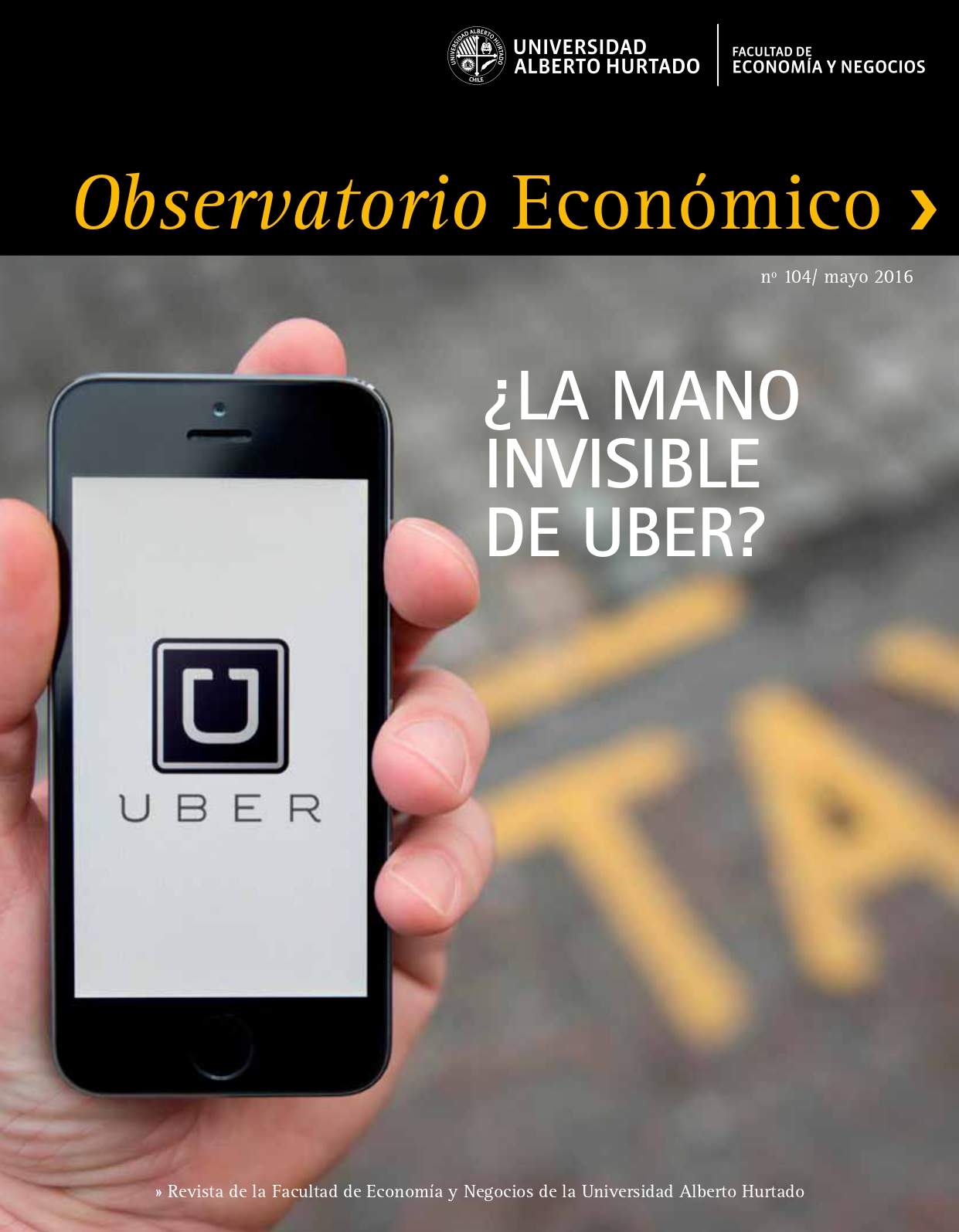
The Invisible Hand of Uber?
DOI:
https://doi.org/10.11565/oe.vi104.105Keywords:
UBER, political economyAbstract
Uber is—in technical terms—what economists call a platform. In simple terms, it is an intermediary that connects, online, suppliers of transportation services with those who demand them. Its business model is simple. On one side, the company registers all private drivers willing to offer transportation services. On the other, potential passengers “download” an app—a program installed on a mobile phone—through which they request the services of a driver registered with Uber. The company sets the estimated price of the requested trip and the transaction is executed. In general terms, 80% of the fare constitutes the driver's compensation, while Uber retains the remaining 20%. Continue reading...
Downloads
Downloads
Published
Issue
Section
License
Copyright (c) 2016 OBSERVATORIO ECONÓMICO

This work is licensed under a Creative Commons Attribution-ShareAlike 4.0 International License.