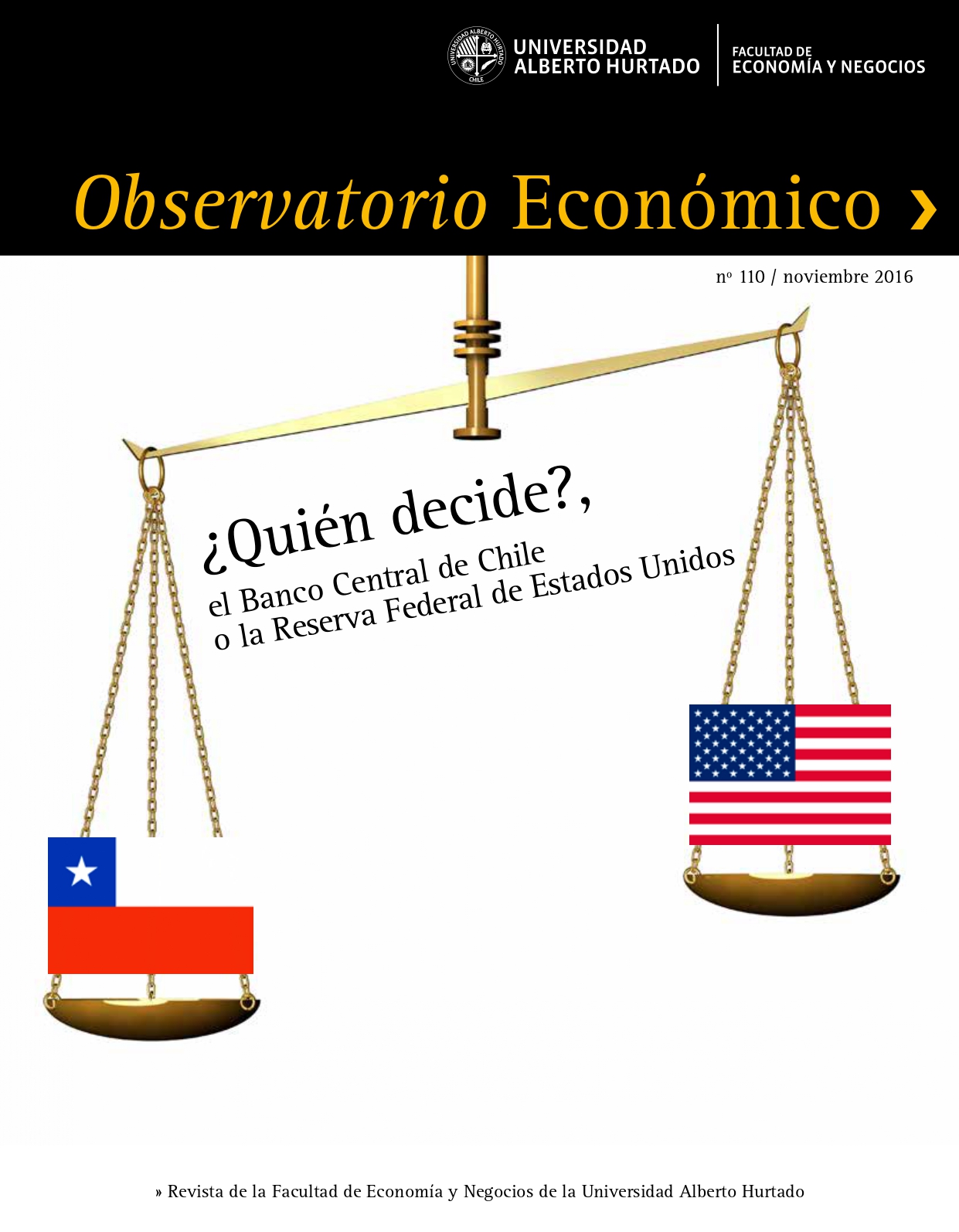
Who Decides?
The Central Bank of Chile or the Federal Reserve
DOI:
https://doi.org/10.11565/oe.vi110.121Keywords:
Chilean economy, Central Bank of Chile, US Federal ReserveAbstract
One of the economic pillars of the Chilean model is the supposed independence of its Central Bank. With its building shaped like a safe, the Central Bank assures Chileans that monetary policy will be autonomous from political pressures and that it will implement the policies needed to keep inflationary pressures contained. However, this autonomy would be called into question by a global phenomenon that has been shaping the economic and financial development of many countries since the 2008 international crisis: the United States implemented an aggressive monetary policy (quantitative easing, QE) that quadrupled the world supply of dollars, that is, from US$1 trillion to US$4.5 trillion. In other words, 60% of international liquidity, on which Chilean banks also depend, is controlled without any counterweight by the Fed, that country's central bank. In this context, can the central bank of a small emerging economy control liquidity in the national banking system and achieve its inflation objectives? Continue reading...
Downloads
Downloads
Published
Issue
Section
License
Copyright (c) 2016 OBSERVATORIO ECONÓMICO

This work is licensed under a Creative Commons Attribution-ShareAlike 4.0 International License.